the challenge
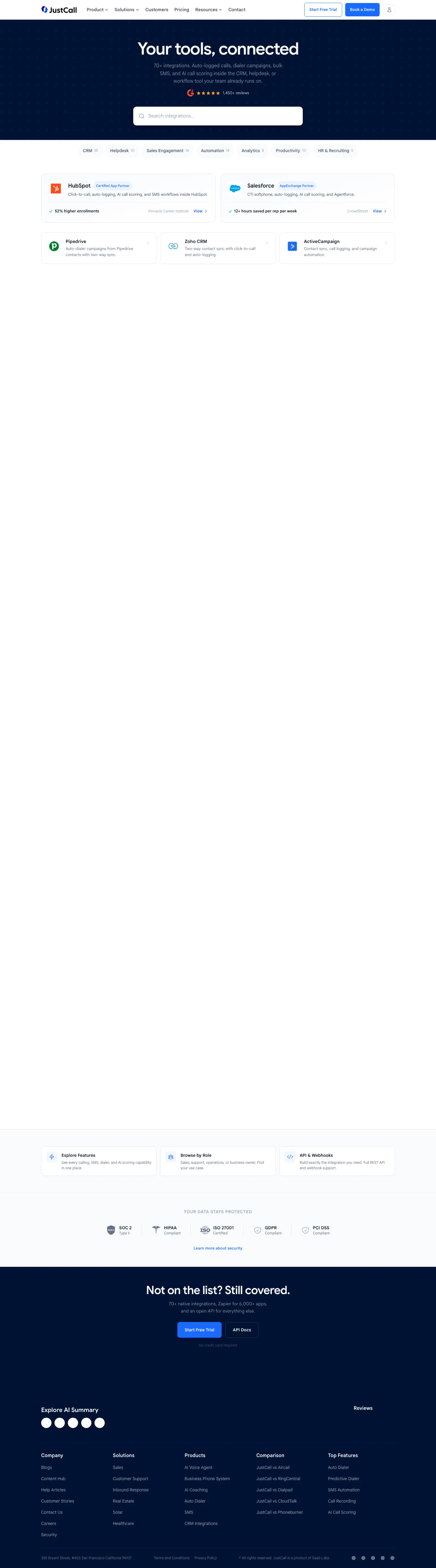
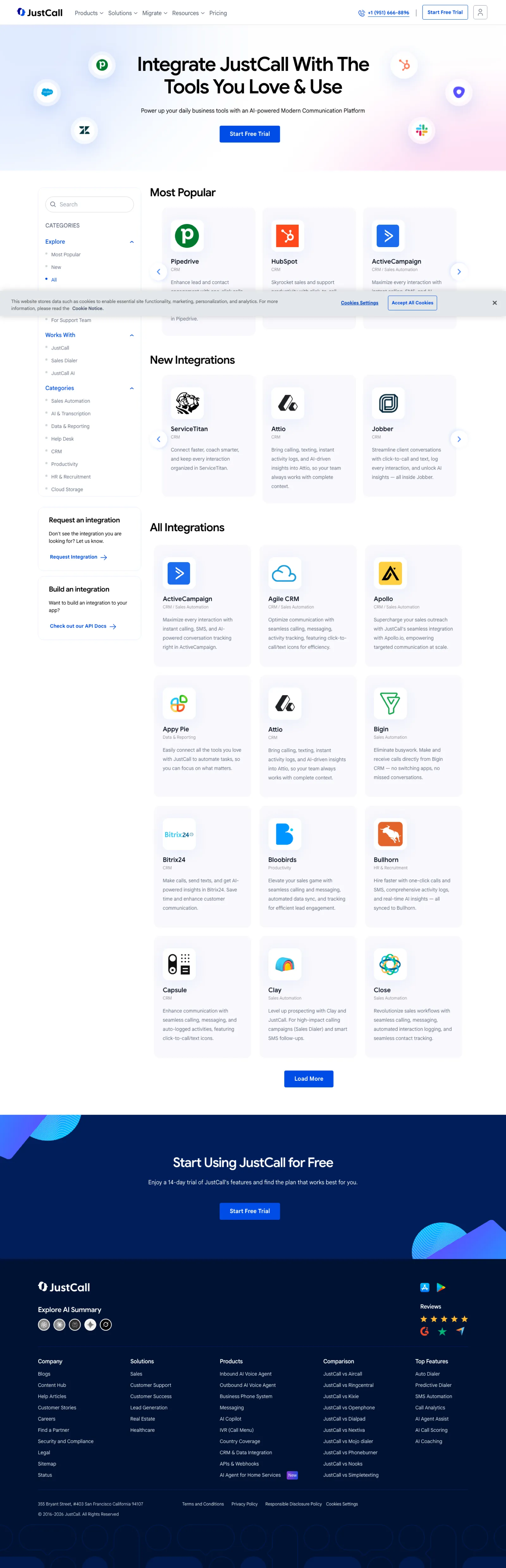
In July 2024 the integration directory was a flat grid of logos over thin pages that had not been touched since their original builds. Every partner page looked the same, said little, and had never been measured against a control. It was treated as a place to list integrations, not a channel that could convert.
highlights
- 01Rebuilt the top-of-funnel integration pages one at a time on the same Value Proposition Canvas method producing lifts on the product pages, six pages (Outreach, HubSpot, Greenhouse, Bullhorn, Plecto, Pipedrive) in roughly two months.
- 02Ran the first A/B test in the directory’s history: the HubSpot page v1 challenger lifted the baseline +26.9% against a control (Wingify).
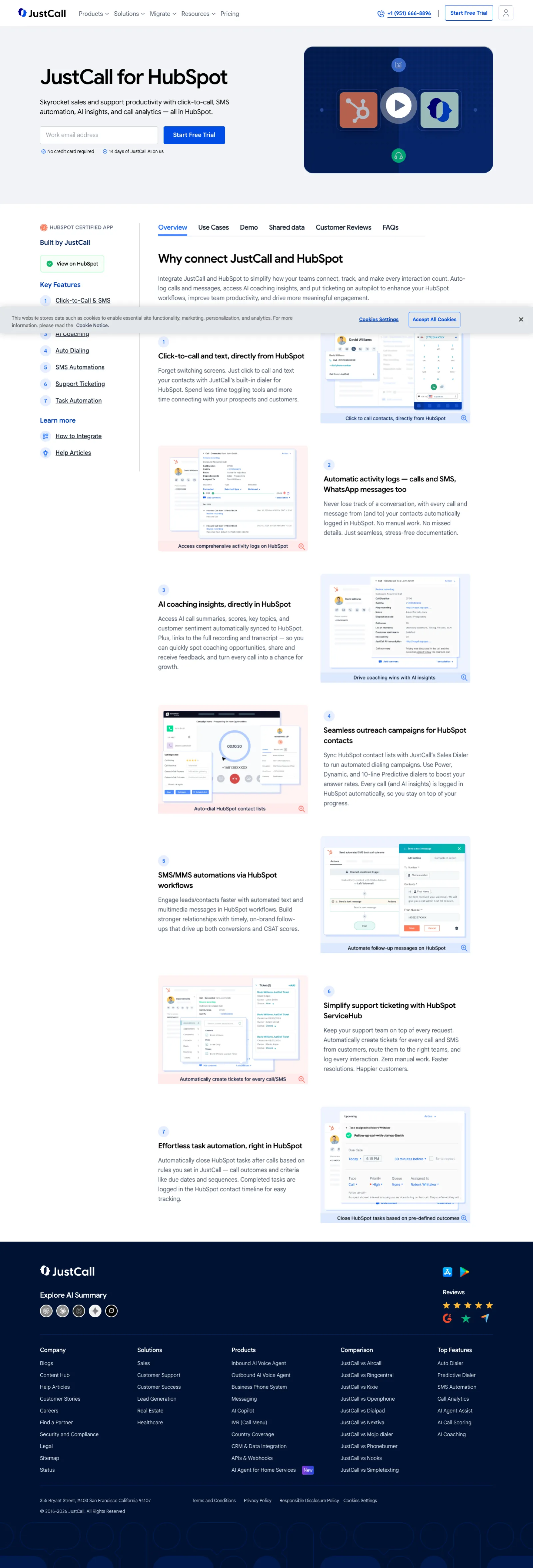
- 03When the copy-only rewrite hit its ceiling, rebuilt the HubSpot page structurally: new sidebar, tabbed content, section navigation, a clearer pricing redirect, and an embedded activity-log walkthrough.
- 04That structural rebuild drove +48% signups, +25% SAL-to-customer, +17% clicks to pricing, and +86% scrolls to the footer against a control, the highest-impact integration test of the tenure.
- 05Made the v2 rebuild the template every later partner page was built against, then ran coverage as a steady program (Attio, ServiceTitan, monday.com, Zoho, and marketplace listings).
- 06Stood up measurement where there had been none: Jan to Aug 2025, partner landing pages carried 123 demos and 309 signups, a first baseline on the surface.
the messaging, page by page
The integration page, rebuilt
A thin page that named the integration and little else, identical to every other partner page in the grid.
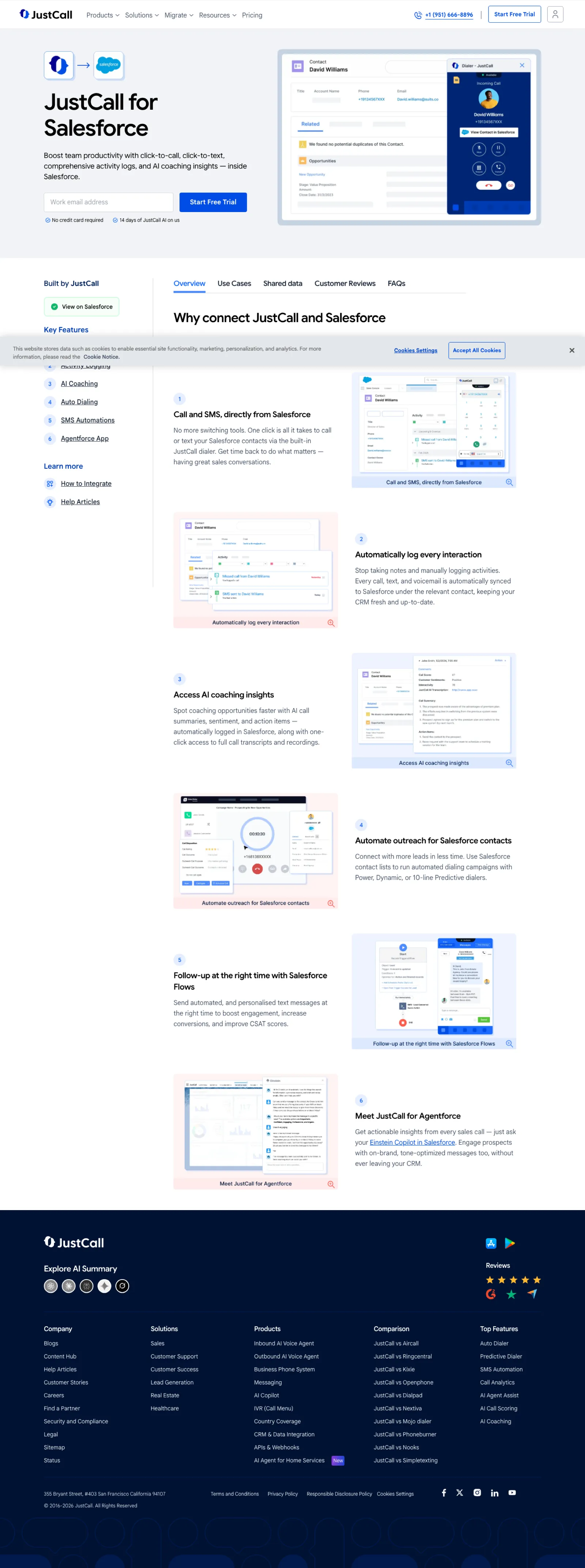
A CRO-tested landing page: sidebar, tabbed content, a clear pricing path, and a walkthrough of the integration in action, written to the job the integration does, not the logo.
A directory lists; a landing page converts. The structural rebuild changed the page from a catalog entry into a page built to move one specific buyer from interest to signup. Buyers do not search for an integration for its own sake, they search for the outcome it unlocks.
the impact
A/B results are Wingify-measured against a live control; volumes are from internal monthly PMM reports.
+26.9%
first measured lift on the HubSpot page, a copy rewrite, the first integration page in the company’s history with a measured lift against a control.
+48%
signups on the HubSpot structural rebuild, with +25% SAL-to-customer, +17% clicks to pricing, and +86% scrolls to footer, against a control.
309
partner signups (and 123 demos) from integration landing pages, Jan to Aug 2025, the first measured baseline on a surface that previously had none.
why it worked
Measured, not published — putting every page against a Wingify control turned opinion into evidence and made the winning pattern repeatable.
Structure beat copy — the v1 copy rewrite proved the ceiling; the v2 rebuild, sidebar, tabs, pricing path, walkthrough, is what actually moved signups.
One template, then coverage — once the v2 pattern won, every later page inherited it, so the channel compounded instead of restarting each time.
Written to the outcome — pages built around the job the integration does, not the logo, gave a specific buyer a specific reason to sign up.
A/B results are Wingify-measured; volumes are from internal monthly PMM reports. Partner and product names are used post-employment.
before / after · drag to compare
more surfaces
Sources: Wingify A/B logs · monthly PMM reports